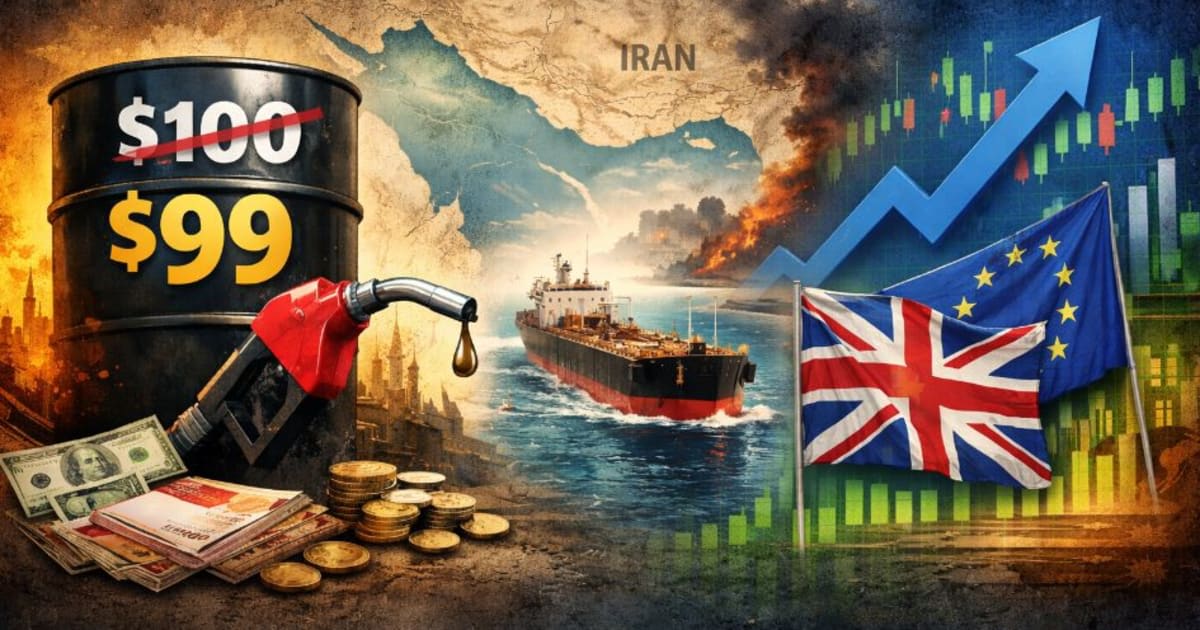
Oil crossed a line this week — and your petrol bill noticed. For months, the Strait of Hormuz — the narrow channel through which roughly 20% of the world's oil flows every single day — has been effectively shut because of the ongoing Iran conflict. Then on Friday, a single Indian tanker made it through. Oil dropped below $100 a barrel. European stocks, which had been bleeding, reversed course. One ship moved markets worth trillions of dollars. That should tell you everything about how fragile the global energy supply is right now.
Simple Answer
Here is the short version. When oil is expensive, everything costs more — shipping, manufacturing, heating your home, filling your car. So when the price drops, investors cheer because company costs fall and profit margins improve. Oil slipping from around $103 to just under $100 a barrel might sound like a rounding error. For the average UK driver filling a 55-litre tank, the difference works out to roughly 3–4 pence per litre — about £1.65 saved each time you fill up. In the US, a $3 drop in barrel prices typically feeds through to about 7 cents less per gallon at the pump, usually within two weeks. European stocks rose because lower oil costs mean healthier corporate profits — and healthier profits mean higher share prices.
How It Actually Works
Here is the chain reaction, step by step.
The Strait of Hormuz sits between Iran and Oman — a stretch of water just 21 miles wide at its narrowest point. Approximately 20% of the world's oil and 25% of all liquefied natural gas (LNG — natural gas chilled to liquid form so it can be transported by ship) passes through it daily. When that route is blocked by conflict, global oil supply tightens. Less supply with the same demand equals higher prices. When it reopens — even partially, even for one vessel — traders assume supply will start recovering. They sell oil futures (contracts to buy oil at a fixed price on a future date), the price falls, and you eventually feel it at the pump.
Why do stock markets care? Because oil is a cost that runs through almost every business. Airlines burn jet fuel. Manufacturers power factories. Logistics firms move goods in diesel trucks. When oil sits above $100 a barrel, those costs are brutal. When it drops, margins improve — and investors reprice shares upward almost immediately.
The Stoxx Europe 600 — a broad index tracking 600 of Europe's largest listed companies — climbed on Friday after weeks of downward pressure. For a UK pension holder with exposure to a European index fund, even a 1% recovery on a £50,000 pot is £500 back on paper. That is not nothing.
Real-World Example
Think back to early 2022. Russia's invasion of Ukraine disrupted major supply routes and sent Brent crude — the international benchmark used to price oil globally — surging from around $79 a barrel in January to $128 by March. UK petrol prices hit a record of approximately 167p per litre by June that year. The average UK driver was spending roughly £90 more annually on fuel compared to twelve months earlier.
The Strait of Hormuz situation in 2026 carries echoes of that episode. Oil climbed above $100 as the Iran conflict choked off shipments. One tanker making it through suggested the blockage might not be total — and markets priced in that optimism within hours.
But here is the pattern worth understanding: oil traders react first and ask questions second. In 2019, when tankers in the Gulf of Oman were attacked, oil jumped 4% in a single session — roughly $3 a barrel in one day. The same reflex is at play now, just working in reverse. One data point, one enormous market move.
Mistakes People Make
The biggest mistake is treating Friday's relief as a resolution. One ship passing through the Strait of Hormuz is not the same as the strait being open. Conflict in the region can escalate again within hours, and oil prices can spike just as fast as they fell. Assuming the drop below $100 is permanent — and making financial decisions on that assumption — is how people get caught out.
Second error: thinking that a European stock rally means the broader economic picture has improved. It hasn't. Interest rates, inflation, and corporate earnings outlooks are unchanged. Stocks reacted to a single headline. That is a very different thing from a trend reversal.
Third, and this one catches people off guard — currency moves. When oil falls, petrodollar flows shift. The US dollar often softens slightly against a basket of currencies when crude drops sharply. For UK investors holding US assets like S&P 500 index funds, a weaker dollar means those gains are worth slightly less when converted back into pounds. A 1% currency move on a $20,000 US fund holding is $200 quietly eroded. Most people never notice until they check their statement.
Your Action Checklist
Start with your energy tariff. If you are on a variable rate in the UK, falling oil prices can eventually push down gas and electricity bills — but the lag is typically six to twelve weeks, not days. Fixed tariff holders will not see any benefit until their deal expires.
If you hold a European equity fund or ETF (a fund that automatically tracks a stock market index), do not rush to add more based on one good day. Friday's rally is a recovery from recent losses, not a signal that the Iran conflict is over.
US readers: watch whether Brent crude holds below $100 for more than two consecutive weeks. If it does, expect around 7–10 cents per gallon relief at forecourts. If oil spikes back above $100, that relief evaporates.
Finally, check your travel bookings. Airlines typically hedge fuel costs months in advance, so airfare rarely drops immediately when oil falls — but if the price stays low through summer, you may see better deals appear on booking platforms by April.
💰 What this means for your money: For the average UK driver, oil below $100 means roughly £1.65 saved per tank fill-up.
"One tanker threading a 21-mile strait moved markets worth trillions. That's how fragile the global oil supply is."
The Bottom Line
Oil dipped below $100 because one ship made it through a war zone — and markets, as they always do, ran with the headline. The relief is real but thin. One tanker is not a ceasefire, and anyone watching oil prices right now should be watching the Strait of Hormuz, not the stock ticker.
Frequently Asked Questions
Why did European stocks go up when oil went down?
Lower oil prices reduce costs for companies across almost every industry — airlines, manufacturers, logistics firms all pay less for fuel. When costs fall, profit margins improve, and investors bid share prices higher. On Friday, the Stoxx Europe 600 index reversed its recent losses as oil slipped below $100 a barrel for the first time in weeks.
Will oil falling below $100 actually lower my petrol or gas prices?
Yes, but not immediately. In the UK, a $3 drop in crude typically translates to about 3–4 pence less per litre at the forecourt, though it usually takes one to two weeks to show up. US drivers can expect roughly 7 cents per gallon relief for every $3 fall in barrel prices. The catch: if the Strait of Hormuz closes again, prices can spike back just as fast.
What should I watch to know if oil prices will keep falling?
The single most important indicator right now is the Strait of Hormuz. If more vessels start passing through and shipping lanes genuinely reopen, oil could drop toward $90. If the Iran conflict escalates again and the strait closes, a return above $105 is possible within days. Watch weekly shipping reports and any ceasefire news out of the region.