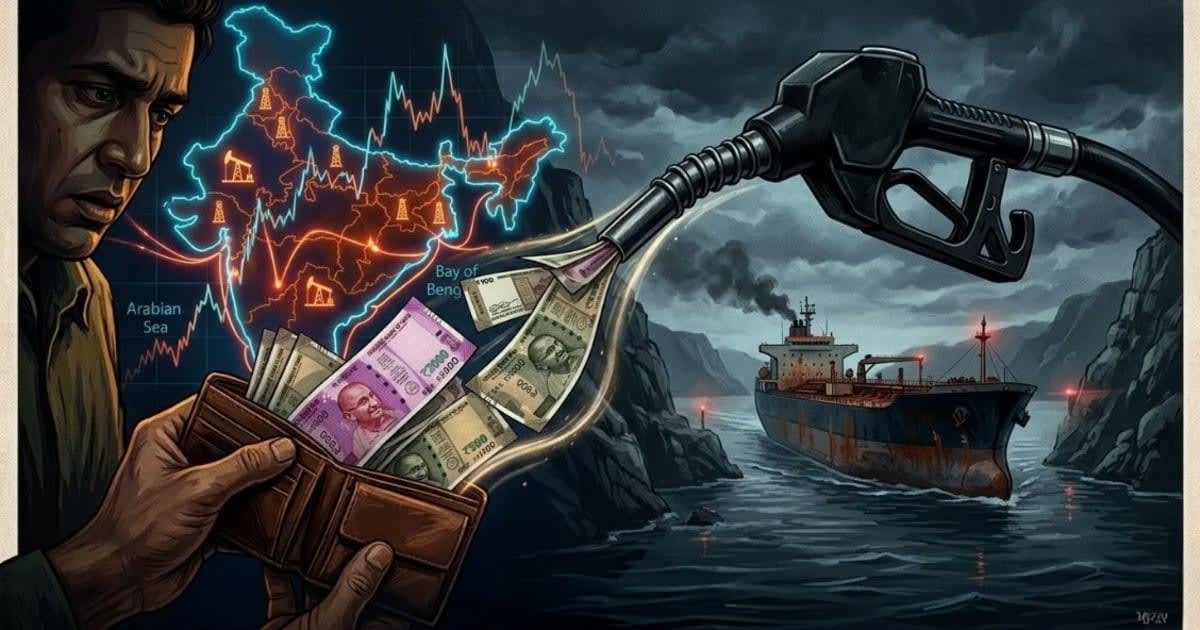
You've seen the headlines — Middle East conflict, oil routes disrupted, governments issuing reassurances. India's oil minister Hardeep Puri told the country there is no fuel shortage and called this 'not the moment for rumour-mongering.' Fine. But here is the question that actually matters for your wallet: if India imports roughly 85% of its crude oil and a significant chunk of that comes through conflict zones, how safe is 'normal' really? The answer is more complicated than any minister's press statement.
Simple Answer
The short version: India's petrol and diesel prices are not going up immediately. The government has confirmed adequate fuel stocks, and officials say India is somewhat insulated from the current energy crisis — partly because it has been buying cheaper Russian crude since 2022, diversifying away from pure Middle East dependence. Petrol in major Indian cities is currently priced around ₹94–₹96 per litre. For a household running one car and one two-wheeler — a typical urban family — monthly fuel spending runs to roughly ₹4,000–₹6,000. A 10% price hike, if it came, would add ₹400–₹600 to that bill every single month. That is not panic territory yet, but it is absolutely worth watching.
How It Actually Works
Here is the chain of cause and effect — step by step, no jargon.
India does not produce enough oil at home. It imports approximately 85% of its crude oil needs — crude being the raw, unrefined form of oil that gets processed into petrol, diesel, and jet fuel. Of those imports, historically around 60% have come from the Middle East, specifically countries like Saudi Arabia, Iraq, and the UAE.
When conflict disrupts Middle East shipping lanes — particularly routes through the Strait of Hormuz and the Red Sea — two things happen. First, the global price of oil rises because supply looks threatened. Second, India's import costs go up even if domestic pump prices don't move immediately. The government controls retail fuel prices and can absorb short-term shocks by letting public sector oil companies — Indian Oil, BPCL, HPCL — take losses temporarily.
The insulation officials refer to comes from a real structural shift. Since Russia's invasion of Ukraine in 2022, India sharply increased purchases of discounted Russian crude, which now accounts for roughly 35–40% of total Indian imports. That diversification genuinely reduces exposure to a pure Middle East supply shock. But it is not a full shield. If global oil prices stay above $100 a barrel for an extended period, the discount on Russian crude narrows, import bills swell, the Indian rupee comes under pressure — and eventually, either the government raises pump prices or it bleeds the finances of state oil companies.
For UK and US investors watching India: Indian energy stocks and the broader Nifty 50 index — India's benchmark stock index, tracking 50 of its largest companies — both wobble when oil import costs threaten corporate margins and government finances simultaneously.
Real-World Example
Cast your mind back to 2022. Russia invaded Ukraine in February, global oil spiked toward $130 a barrel, and India faced a genuine dilemma. The government had not revised petrol or diesel prices for months going into the crisis — a politically sensitive decision held artificially still before state elections. When it finally moved in April 2022, petrol prices jumped by ₹10 per litre in a single revision — roughly a 10–12% increase overnight. For a Delhi commuter filling a 40-litre car tank, that was ₹400 more per fill-up, without warning.
Indian Oil, BPCL, and HPCL — the three state-run fuel retailers — collectively reported losses running into tens of thousands of crores of rupees (one crore equals ten million) during that period because they were forced to sell fuel below cost. Their share prices dropped sharply on the Bombay Stock Exchange. The Nifty Energy index fell roughly 8% over those weeks.
The current situation carries a familiar shape. Government reassurance now, potential price revision later. History suggests the revision, when it comes, arrives in one sharp move rather than a gentle glide.
Mistakes People Make
The first mistake is believing that 'no shortage' means 'no impact on your money.' Fuel stocks being adequate today says nothing about price direction over the next three months. Supply comfort and price stability are two entirely different things — the government can maintain physical supply while still raising prices if import costs make the status quo financially impossible.
Second error: panic-buying. Every time a fuel shortage headline circulates in India, some households and small business owners rush to top up storage. This actually creates artificial shortages at local pumps and can briefly spike informal prices. In 2022, queues at certain petrol stations in metro areas led to waiting times exceeding two hours — wasted time that also costs money.
Third mistake is ignoring the rupee angle. When global oil prices rise, India's import bill swells in US dollar terms. That puts selling pressure on the Indian rupee — meaning the rupee weakens against the dollar. For anyone holding dollar-denominated assets, travelling abroad, or paying overseas education fees, a weaker rupee means those costs go up even if domestic petrol prices stay put. A 5% rupee depreciation on a $10,000 annual tuition fee adds roughly ₹44,000 to your bill at current exchange rates.
Fourth: assuming this crisis will resolve quickly. The Middle East conflict driving these supply fears has structural roots, and markets historically underestimate how long such disruptions last.
Your Action Checklist
Check your fuel retailer stocks. Indian Oil, BPCL, and HPCL are all listed on Indian exchanges. Watch their quarterly guidance — if they start flagging widening under-recoveries (the gap between what they charge you and what it actually costs them), a price revision is probably weeks away, not months.
If you run a small business with significant fuel costs — logistics, deliveries, generators — model what a ₹10 per litre increase would do to your monthly operating costs. For a vehicle covering 3,000 km a month at current prices, that revision would add roughly ₹750–₹900 per month per vehicle.
For UK or US readers with exposure to Indian equity funds: monitor the USD/INR exchange rate. Sustained rupee weakness beyond ₹87–₹88 to the dollar signals that the energy import bill is biting.
Finally, the government said prices are unlikely to rise in the near term. 'Near term' in Indian political language typically means six to eight weeks. Mark that window on your calendar — and revisit this situation in early May.
💰 What this means for your money: A ₹10/litre hike adds roughly ₹800/month for a typical Indian household with one car.
"India held prices before the 2022 shock, then raised petrol by ₹10 a litre overnight. That playbook hasn't changed."
The Bottom Line
The government is telling you not to panic, and on the question of immediate physical supply, it is probably right. But 'no shortage' is not the same as 'no price hike coming' — and anyone who watched the 2022 episode knows how fast that changes. The real number to watch is not the minister's press conference: it is Brent crude's four-week average and the quarterly losses at state oil firms.
Frequently Asked Questions
Will petrol and diesel prices increase in India due to the Middle East crisis?
Not immediately, according to the government — officials have stated prices are unlikely to rise in the near term. However, India imports roughly 85% of its crude oil, and sustained global prices above $100 a barrel historically force a revision. In 2022, India held prices steady for months and then raised petrol by ₹10 per litre in a single move.
How does the Middle East oil crisis affect my monthly budget in India?
Right now, your petrol and diesel costs are unchanged. But if a price revision comes, a ₹10 per litre hike on a 40-litre car tank adds ₹400 per fill-up. Households filling up twice a month would pay roughly ₹800 more — and that is before the knock-on effect on food and delivery prices, since logistics costs feed directly into what you pay at the supermarket.
What signs should I watch to know if India's fuel prices are about to go up?
Watch three things: global Brent crude price staying above $100 for more than four consecutive weeks; quarterly results from Indian Oil, BPCL, or HPCL flagging heavy losses; and any announcement of state election schedules ending — governments historically avoid price hikes during election campaigns, then move fast once they're over.