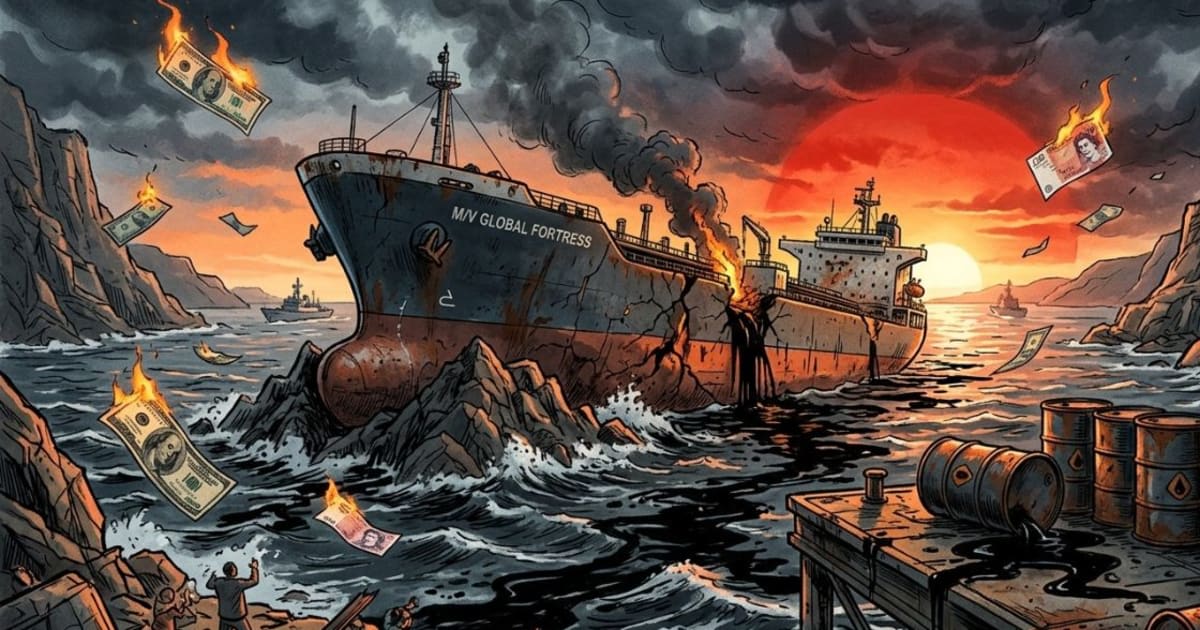
The world's most important oil corridor has been effectively shut for nearly two weeks — and Asia, the planet's biggest crude importer, is now rationing fuel like it's wartime. Four-day work weeks. Mandatory work-from-home. Emergency government orders. This isn't a distant geopolitical story. The Strait of Hormuz carries 20% of global oil supply, and right now, almost none of it is moving. Your gas bill already knows.
What's Happening
The Iran war has done what energy traders have nightmared about for decades: choked off the Strait of Hormuz, the narrow 21-mile-wide channel through which roughly one-fifth of the world's oil — and a third of all liquefied natural gas — flows every single day. The closure has now stretched close to two weeks, a duration that has moved this from 'acute shock' territory into something far more structurally damaging to global supply chains.
Asia is absorbing the worst of it first. Countries across the region — among them the world's largest oil importers — have begun implementing emergency conservation measures that would have seemed extraordinary just a month ago: mandatory four-day working weeks, government-enforced work-from-home orders, and caps on industrial fuel consumption. These aren't pilot programmes. They are panic responses.
In Washington, Trump has been racing to contain the economic fallout, signalling that US oil-related sanctions on certain countries will be lifted in an attempt to redirect supply flows. The implicit admission is significant — the administration knows the economic damage is real, measurable, and spreading fast. For US households already paying well above $3 a gallon at the pump, 'the conflict could be over soon' is not a household budget strategy.
Why Your Money Cares
Start with the pump. Oil above $100 a barrel, sustained by a closed Hormuz, means US gasoline prices that are already elevated push toward levels not seen since mid-2022's post-Ukraine spike. Every additional $10 per barrel translates to roughly 25 cents more per gallon. A typical American family filling a 15-gallon tank twice a week is already looking at an extra $75–$90 a month — and that's before prices fully adjust to the closure duration.
For UK households, petrol prices at the forecourt track crude with a two-week lag. An £8–£10 more per tank is the current baseline; a prolonged closure pushes that higher still, arriving on top of energy bills that haven't fully recovered from the 2022 crisis.
The second hit is inflation. Energy costs feed directly into the price of groceries, manufactured goods, and freight. The Fed and the Bank of England were both inching toward rate cuts in early 2026. A sustained oil shock of this magnitude doesn't just delay those cuts — it actively makes the case for holding rates higher for longer, keeping mortgage costs elevated for millions of households on both sides of the Atlantic.
The Numbers That Matter
21 miles — the width of the Strait of Hormuz at its narrowest point. One of the most economically consequential stretches of water on the planet, and right now it is not functioning as a trade route.
20% — the share of global daily oil supply that transits Hormuz. A third of the world's LNG moves through the same channel. Both figures represent supply that markets cannot easily reroute in days or even weeks.
~2 weeks — the approximate duration of the effective closure as of 13 March 2026. Historically, even a 48-hour Hormuz disruption triggers double-digit crude price spikes. Two weeks is well beyond any prior peacetime precedent.
$100+ — where Brent crude is trading now, a level that, if sustained for a full quarter, adds an estimated 0.8–1.0 percentage points to US CPI inflation based on prior energy shock modelling — the difference between rate cuts happening in 2026 and not happening at all.
4-day weeks — the emergency labour measure being rolled out across Asia, a demand-destruction signal that historically precedes broader economic slowdown across export-dependent economies that supply goods to US and UK consumers.
The Street Mood
Markets are not calm. Defense and energy stocks are the only sectors seeing consistent buying. Everything else — airlines, consumer discretionary, logistics, retail — is being treated as collateral damage.
Sentiment data is ugly. CNN's Fear & Greed Index has lurched deep into 'Extreme Fear' territory, a reading that typically coincides with peak uncertainty rather than peak pain. That distinction matters: it suggests markets haven't finished pricing in the full duration risk of the Hormuz closure.
Gold has pushed firmly above $3,000 an ounce — the classic 'we don't know how bad this gets' safe-haven trade. Options markets are pricing significant volatility premiums on crude, airline stocks, and emerging market currencies most exposed to oil import costs. If you hold a balanced retirement portfolio, the energy-heavy side is working for you right now. The rest is not.
What to Watch
Asia scrambled first. Whether the scramble spreads West depends on three triggers you should track closely.
First: any movement on Hormuz itself — a reopening, even partial, would take $10–15 off crude within hours. Second: Trump's sanctions relief announcement, expected in detail within days, which could redirect enough alternative supply to cap prices — or fail to, which would confirm the market's worst-case supply math.
Third: the Federal Reserve on 19 March. Chair Powell faces a direct question about whether sustained $100 oil changes the rate path. If the answer is yes, mortgage holders in the US — over 40 million of them with variable or near-renewal fixed rates — face the real prospect of cuts pushed into 2027.
💰 What this means for your money: For the average US household, this means roughly $75–$90 more per month in fuel costs alone.
"Two weeks. That's how long the world's most important oil artery has been shut — and markets still haven't priced the full damage."
The Bottom Line
Asia scrambled first, but this doesn't stay in Asia. A two-week Hormuz closure is without modern peacetime precedent, and the economic pressure — higher fuel costs, stickier inflation, delayed rate cuts — flows directly into American and British household budgets. There's a version of this story where Trump's sanctions relief and a quick ceasefire contain the damage. The oil price says markets aren't betting on that version.
Frequently Asked Questions
Why is the Strait of Hormuz closure such a big deal for oil prices?
The Strait of Hormuz is the world's single most critical oil transit point — around 20% of global daily supply and a third of all LNG passes through it. When it closes, that volume cannot be quickly rerouted, which means supply falls sharply while demand stays constant, forcing prices up fast.
How does Asia's fuel crisis affect my gas prices in the US or UK?
Oil is a global commodity — a shortage anywhere pushes prices everywhere. With Brent crude above $100, US drivers are paying an estimated 25–30 cents more per gallon than last month, adding roughly $75–$90 per month for a typical household. UK drivers face 8–10 pence more per litre, or around £8–£10 extra per fill-up.
What's the next big thing to watch that could change this situation?
The Federal Reserve's meeting on 19 March is the biggest near-term scheduled event — if Powell signals rate cuts are delayed because of oil-driven inflation, mortgage and borrowing costs stay higher for longer. Beyond that, any diplomatic movement on the Strait of Hormuz reopening would be the single most powerful market-moving trigger available right now.