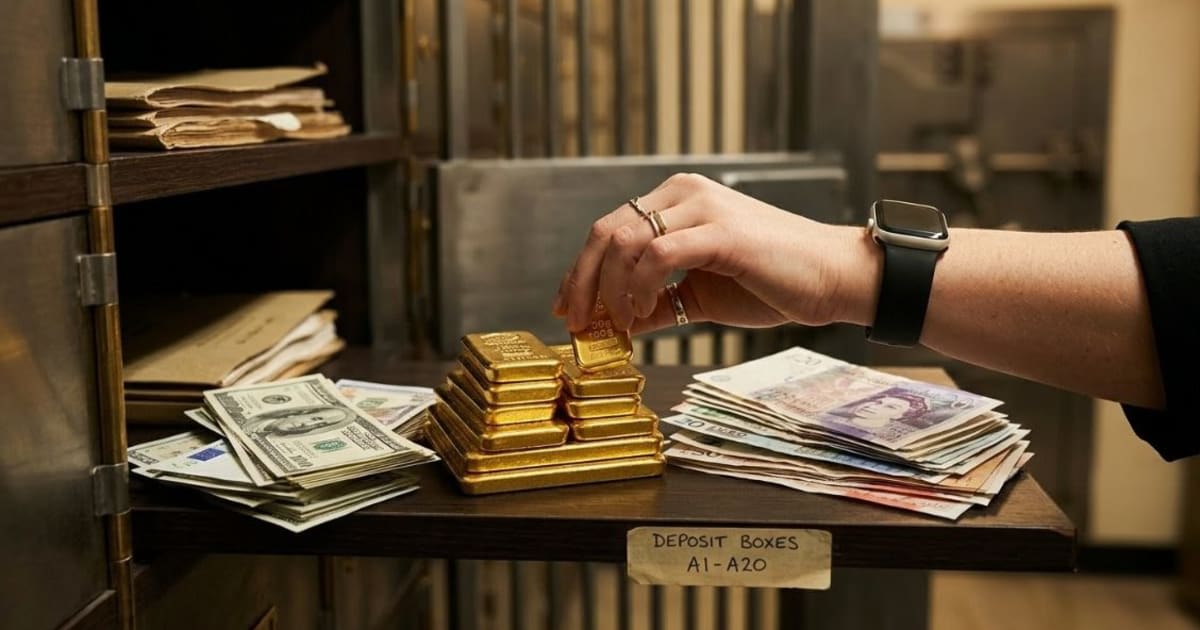
Gold jumped 2% on Wednesday. Oil slid. And suddenly, the inflation math looks a little less brutal. Reports that Washington is deep in negotiations to end the Middle East conflict sent energy prices tumbling — and that eased one of the biggest fears hanging over your grocery bill, your mortgage rate, and every central bank on the planet. This is what a ceasefire trade looks like in real time.
What's Happening
Spot gold settled around $4,548 an ounce on Wednesday, up roughly 1.6% on the day, with April futures pushing past 3% gains to $4,545. The catalyst: Trump told reporters Tuesday the US and Iran are actively in talks, and that he pulled back from threatening strikes on Iranian energy infrastructure because "we're negotiating." Iran denied direct talks. Markets moved anyway.
That context matters a lot. Oil had been trading above $112 a barrel at the peak of the Iran war — brutal for household budgets everywhere. Above $110 per barrel, US pump prices hit roughly $4.50 per gallon, UK forecourt prices climbed past 150p per litre, and Indian retail fuel prices were approaching ₹120/litre after subsidy adjustments. As de-escalation signals emerged and oil slipped back toward $100, inflation expectations eased — which is exactly the environment where gold finds its footing.
The Fed held rates at 3.5%–3.75% last week, forecasting just one cut for all of 2026. With oil retreating, traders are now walking back bets on an April rate hike. That shift in rate expectations is doing the heavy lifting for gold right now — more than any safe-haven buying.
Why Your Money Cares
Here's the direct line. When oil falls, inflation expectations fall with it. That gives central banks — the Fed, the Bank of England, the RBI — more room to hold or cut instead of hike. And rate hikes are the single biggest threat to your mortgage, your home loan EMI, and your retirement portfolio right now.
The S&P 500, FTSE 100, and Nifty 50 all fell over four consecutive weeks as the Iran war kept oil above $100. Oil above $100 did that. A sustained pullback could begin reversing those losses — and for the average US household spending roughly $300/month on gas and energy, a 10% oil decline puts about $30 back in your pocket every month.
UK homeowners notice this first. Every rate hike expectation that gets priced out saves roughly £30–50 per month on a £250,000 variable-rate mortgage. In India, fuel prices feed directly into food transport costs — which means the vegetable market gets cheaper before the petrol pump officially adjusts, often by two to three days.
The Numbers That Matter
$4,548. That's where gold settled Wednesday, bouncing back from a 2026 low of $4,100 hit just days ago — still more than 20% below January's all-time record of $5,594. The bounce is real. So is the remaining gap.
Oil is now near $100 per barrel. It was above $112 at the height of the Iran conflict. That $12 drop translates to roughly 30 cents less per gallon at US pumps, about 8p/litre in the UK, and around ₹2.50/litre less in India — arriving at your tank before the month is out.
3.5%–3.75% — the Fed's rate range, held last week with just one cut forecast for all of 2026. Traders briefly priced a 10% chance of a hike in April. That risk is now fading as oil retreats — good news if you carry a variable-rate mortgage or a home loan EMI.
20% — the share of global oil flowing through the Strait of Hormuz. It's still effectively closed. That's the wildcard sitting underneath every other number here, the one that could flip the inflation math back to brutal inside 48 hours if talks break down.
The Street Mood
Markets want to believe this is over. They're not there yet. Gold's 2% gain looks encouraging on a Wednesday, but this same metal dropped 8% in a single session just days ago and posted its worst weekly performance since 1983 last week. One good day doesn't erase that.
The Fear & Greed Index remains firmly in "Extreme Fear" territory. The S&P 500 has now fallen four straight weeks — its longest losing streak in a year — and institutional fund flows show money still rotating into cash, not back into risk assets. Whether you're watching your 401(k) in New York, your pension pot in London, or your SIP returns in Mumbai, the read is the same: this is a relief rally, not a recovery. There is a difference.
What to Watch
That 2% gold pop is entirely conditional on the next 72 hours. Trump's five-day pause on Iran strikes is the real clock — if talks collapse, oil surges back above $110 and your grocery and fuel bills follow within days.
Watch the Strait of Hormuz closely. It carries 20% of global oil supply and is still effectively closed. Any credible reopening signal pushes oil lower and gives gold another leg up.
The Fed meets again in late April. If oil holds below $95 by then, rate cut bets come back to life — the real unlock for the S&P 500, FTSE 100, and Nifty 50 alike. The inflation math looked less brutal on Wednesday. Whether it stays that way is one phone call between Washington and Tehran.
💰 What this means for your money: For the avg US household, a 10% oil drop means ~$30/month less on fuel and energy bills.
"This is a relief rally, not a recovery. Gold dropped 8% in one session last week — Wednesday doesn't change that."
The Bottom Line
Gold climbed because oil fell, and oil fell because a ceasefire sounds possible. Don't mistake a negotiation for a resolution — the Strait of Hormuz is still effectively closed and that risk hasn't gone anywhere. The real test is whether Washington and Tehran are actually talking, or just buying time before the next escalation.
Frequently Asked Questions
Why did gold go up if the Iran situation is getting better?
It's counterintuitive but the logic holds. When the Iran war escalated, oil surged above $112 — which raised inflation fears and pushed rate hike bets higher. Higher rates are bad for gold. Now that oil is retreating toward $100, inflation expectations are easing and the rate hike threat is fading — which directly benefits gold. The ceasefire trade here isn't about safe-haven demand; it's entirely about oil, inflation, and what central banks do next.
How does falling oil actually affect my monthly bills?
Directly and within days. For US drivers, the current $12/barrel oil drop translates to roughly 30 cents less per gallon at the pump. UK motorists could see about 8p/litre less at the forecourt. In India, the effect hits grocery costs before the petrol price officially changes, since transport and delivery costs adjust first. For anyone with a variable-rate mortgage or EMI, lower inflation also reduces the chance of a rate hike — which saves real money every month.
What should I watch this week that could move gold and oil?
Trump's five-day pause on Iran strikes is the countdown — that clock is running right now. Any breakdown in US-Iran talks could send oil back above $110 fast. Watch news on the Strait of Hormuz: it carries 20% of global oil and remains effectively closed, and any status change there moves markets immediately. After that, the next major Fed signals arrive in late April — if oil is below $95 by then, a rate cut could return to the table.