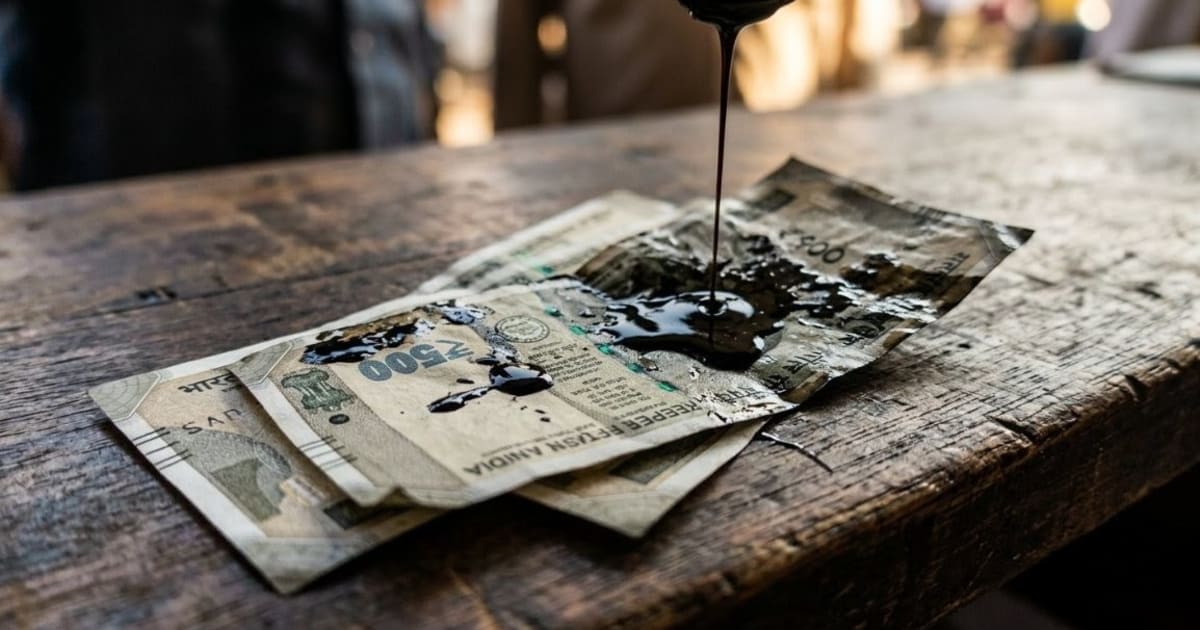
Priya Venkataraman, a software architect in Austin, Texas, opened her ICICI NRI banking app on Tuesday morning and watched her scheduled ₹8 lakh remittance to her parents in Chennai quietly shrink — not in dollar terms, but in the purchasing power it would actually deliver back home. Three months ago, the same transfer felt routine. Today, the rupee's record plunge to 96.6150 against the dollar has turned every cross-border transaction into a quiet tax nobody voted for.
This isn't Priya's personal misfortune. It's a structural shift that's repricing life for millions — NRIs timing remittances, domestic importers hedging freight costs, and Indian retail investors holding dollar-linked mutual funds. The rupee has shed 7% since January 1, 2026. That's not a rounding error. That's a compounding wound.
Trend Breakdown
How 7% Becomes Real Money
The selloff didn't arrive all at once. The rupee was trading near 90.10 in early January. Then March happened — West Asia escalated, Iran disrupted Strait of Hormuz shipping lanes, and Brent crude spiked past $105 a barrel. India, which imports roughly 87% of its crude needs, got caught in a double bind: higher import bills and a flight of dollar liquidity out of emerging markets.
Here's what 7% actually looks like across different investor profiles:
| Profile | Jan 2026 Rate | May 19 Rate | ₹ Impact per $10,000 || |---|---|---|---| | NRI remitting from US | ₹90.10 | ₹96.61 | +₹65,100 received (dollar earner wins) | | Indian importer paying in USD | ₹90.10 | ₹96.61 | −₹65,100 extra cost per $10,000 | | UK-based NRI (GBP/INR shift) | ₹114.20 | ₹122.40 | +₹82,000 received per £10,000 | | EU-based NRI (EUR/INR shift) | ₹97.30 | ₹104.10 | +₹68,000 received per €10,000 | | Domestic investor in US equity fund | NAV ₹45.20 | NAV ₹48.30 | +₹3.10/unit FX tailwind |
The asymmetry is stark. If you earn in dollars, pounds, or euros, you're sitting on an unexpected windfall every time you convert. If you're on the other side — running an import-dependent business, paying dollar-denominated EMIs on foreign education loans, or booking international travel — your costs just rose 7% without a single price tag changing.
Your foreign education loan? If your outstanding principal is $50,000, the rupee equivalent has jumped from ₹45.05 lakh to ₹48.30 lakh — a silent ₹3.25 lakh addition to your debt load, and you didn't borrow a rupee more.
What the Data Reveals
What the Data Shows That the Headlines Miss
The narrative in most newsrooms focuses on the rupee as a victim of crude prices. That's accurate, but incomplete. The data reveals something more uncomfortable: the Reserve Bank of India's foreign exchange reserves, while still substantial at approximately $648 billion, have been drawn down by an estimated $19–22 billion since February to defend the currency. The RBI isn't letting the rupee find its own floor — it's managing a controlled descent.
That matters for your portfolio in a specific way. A managed depreciation means:
- Volatility is artificially suppressed — options pricing on USD/INR is cheap relative to the macro uncertainty, meaning currency hedges are underpriced right now
- The adjustment, when it comes, could be sharper — markets pricing a ceasefire-driven crude reversal may be disappointed by India's structural current account deficit, which remains around 1.8–2.1% of GDP even at $85 crude
- Domestic inflation hasn't fully absorbed the pass-through yet — food and fuel CPI typically lags currency moves by 6–10 weeks, meaning your grocery bill in India may not peak until late June
Data from currency positioning desks shows that speculative short positions on the rupee are near a 14-month high. The crowd is bearish. That's a contrarian signal worth watching — not for buy/sell action, but for understanding that the move may already be crowded.
Outliers & Surprises
Who's Quietly Winning — and Who's Getting Crushed
Not everyone is on the wrong side of ₹96.61.
Hidden winners:
- IT exporters billing in USD — every dollar of revenue converts to ₹6.51 more than it did in January. For a mid-sized IT firm with $200 million in annual revenue, that's a ₹130 crore annual earnings tailwind, all else equal.
- Pharma exporters with US market exposure — same currency math applies; margin expansion is effectively free.
- NRIs in the Gulf (UAE, Saudi) — dirham and riyal are dollar-pegged, so your remittances home are delivering 7% more purchasing power than in January.
Getting quietly crushed:
- Students repaying dollar-denominated tuition loans from Indian rupee income
- Indian airlines hedging jet fuel in dollars — Air India and IndiGo's unhedged fuel exposure rises by roughly ₹1,800–2,200 crore annually for every ₹1 the rupee falls
- Small importers of electronics, machinery, and chemicals who can't pass costs upstream
Your mutual fund portfolio tells the same split story. If you hold an international fund of funds — say, a US technology-focused feeder fund — the NAV has likely risen 7–9% in rupee terms even if the underlying dollar index barely moved. That's currency gain, not alpha. Don't mistake it for manager skill.
Data-Based Outlook
Can a US-Iran Ceasefire Actually Fix This?
Diplomats in Muscat are reportedly closing in on a framework. Crude markets have already priced in a partial risk premium — Brent dropped from $108 to around $97 over the past two weeks on ceasefire speculation. If a formal deal is announced, the immediate read-through for the rupee could be a 1.5–2.5% relief rally, pulling the pair back toward the 93.50–94.50 range.
But here's what that relief won't fix:
- India's current account deficit doesn't disappear at $85 crude; it just becomes manageable
- The Fed's rate trajectory — still holding above 4.25% — keeps the dollar structurally bid against emerging market currencies
- Domestic political calendar (state elections in Q3 2026) limits the RBI's appetite for aggressive rate moves that might otherwise attract capital inflows
The rupee's structural floor has shifted. Even in an optimistic crude scenario, market pricing implies the USD/INR pair is unlikely to revisit the 88–90 range before Q1 2027 without a material shift in either Fed policy or India's trade balance.
How Long Until This Resolves
The rupee's near-term relief, if a US-Iran ceasefire is formally signed, likely arrives within the next 4–6 weeks and takes the pair to 93.50–94.50 — call it a partial recovery, not a reversal. A durable return toward 90 requires both sub-$85 crude holding through Q3 2026 and the Fed signaling at least one rate cut, which the market doesn't currently expect before September 2026. Watch the June 18 OPEC+ output decision and the July Fed meeting as the two clearest trigger points for any sustained rupee stabilization.
The views expressed here are for informational purposes and do not constitute personalized financial guidance. Readers should consult a licensed advisor before making investment decisions.